Fresh ingredients deserve a central place at the table. Variety, enough food, and thoughtful preparation make that idea useful.
A food philosophy with a wide table.
Walker placed uncooked vegetables, fruit, salads, nuts, and fresh juices at the center of his approach. His enthusiasm for these foods helped readers think beyond heavily processed meals and take preparation into their own hands.
His use of terms such as living food and vital elements belongs to the language of his books. Here, the practical invitation is direct: learn the ingredients, enjoy their differences, and find a sustainable place for them in everyday meals.
Explore the ingredients.
Select a food to see its place in a varied kitchen. These are contemporary food notes, separate from Walker’s disease-specific claims.
Sweetness from the root
Carrots
Grate into salads, cut into sticks, roast, or juice with a brighter ingredient. Carrot’s orange pigments include beta-carotene, a precursor of vitamin A.
Use the form you enjoy; extracted juice and whole carrot bring different textures and amounts of fiber.
A wider palette of leaves
Leafy greens
Lettuce, spinach, kale, and other greens are not interchangeable in flavor. Try tender leaves in a salad and tougher leaves chopped finely or cooked.
Rotate varieties rather than expecting one celebrated green to supply everything.
Crisp, aromatic, refreshing
Cucumber & celery
Cucumber contributes a mild, watery crunch; celery supplies a pronounced savory aroma. Both are useful in salads and vegetable blends.
A refreshing taste is a culinary quality, not evidence of a special cleansing effect.
Color, aroma & contrast
Whole fruit
Apples, citrus, berries, and seasonal fruit can brighten a salad or become a simple snack. Whole fruit keeps the edible flesh with the juice.
Choose variety and forms you enjoy. A fruit juice is a different food experience from the whole fruit.
Substance in a small handful
Nuts & seeds
Walnuts, almonds, pumpkin seeds, and other nuts and seeds bring texture, fat, and some protein to the plate.
Account for allergies. These foods complement the wider meal rather than replacing every other protein source.
Make room for the whole day
A complete table
Fresh foods work best as part of meals that meet your energy, protein, and micronutrient needs. Some foods are better or safer cooked.
An entirely plant-based diet needs a reliable source of vitamin B12. More restriction is not automatically more nourishment.
Variety does the work.
A generous plate can combine leaves, roots, fruit, nuts, seeds, and other nourishing foods. Texture matters: crisp, creamy, juicy, and chewy ingredients make a meal more interesting. So do appetite, convenience, and the foods available where you live.
A raw-food theme need not make the table narrow. Some ingredients, including dried kidney beans, require proper cooking. A fully plant-based pattern also needs deliberate attention to nutrients such as vitamin B12.
Use the books with attention.
Walker’s salad and juice books belong together: one emphasizes the plate, the other the glass. Notice the difference between his preparation ideas and his explanations of what they accomplish in the body.
For a modern use, ask a plain question: does this change help me eat a wider variety of foods and enjoy preparing them? Record that practical result without turning it into a claim that a food treats a disease.
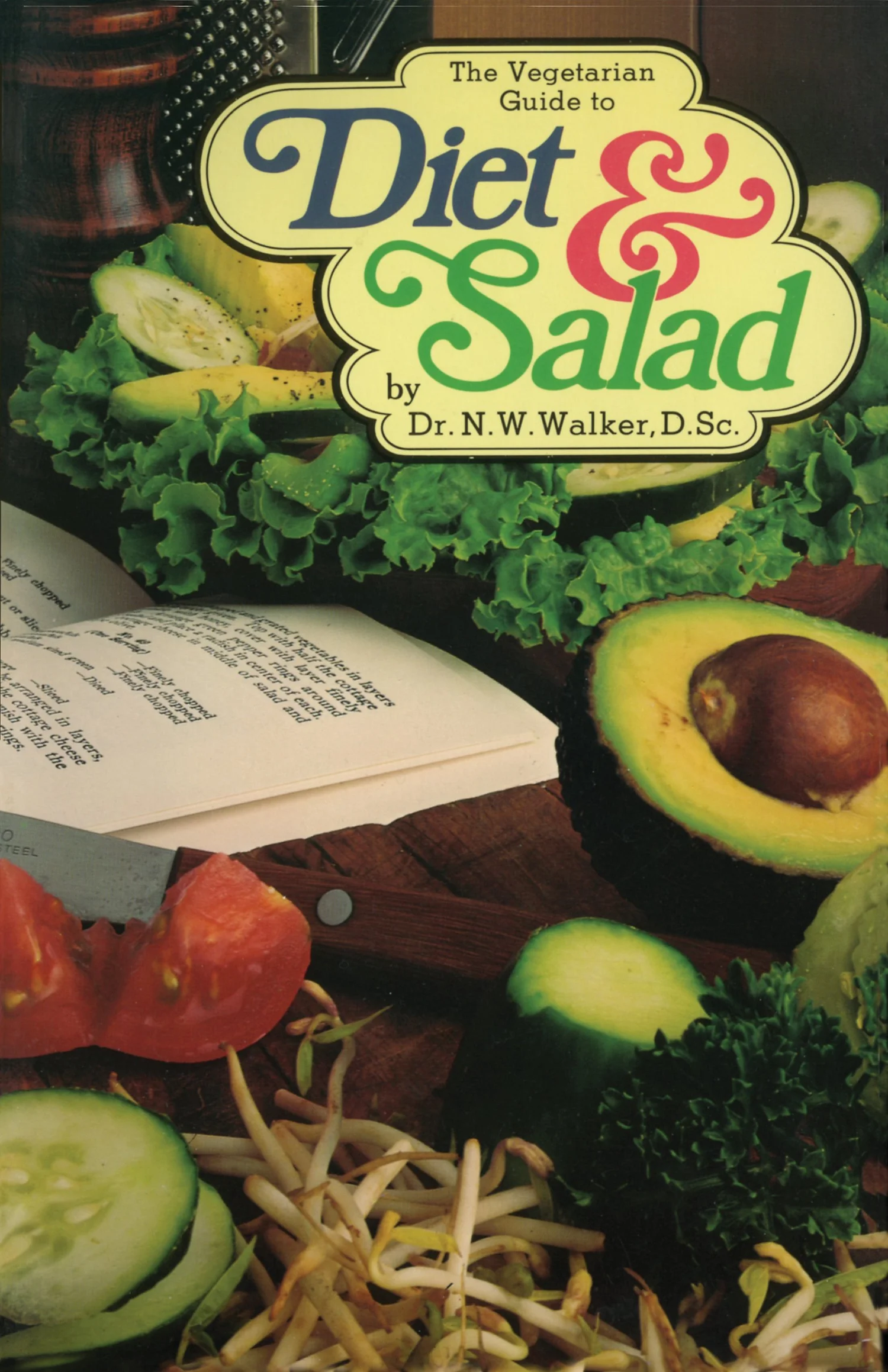
Norman W. Walker
Vegetarian Guide to Diet and Salad
A companion for the table: vegetables, fruit, nuts, salads, and menu ideas. Its ingredient discussions and more than seventy salad combinations make it the most direct bridge from Walker’s books to a varied kitchen.
Buy on AmazonBook & edition details →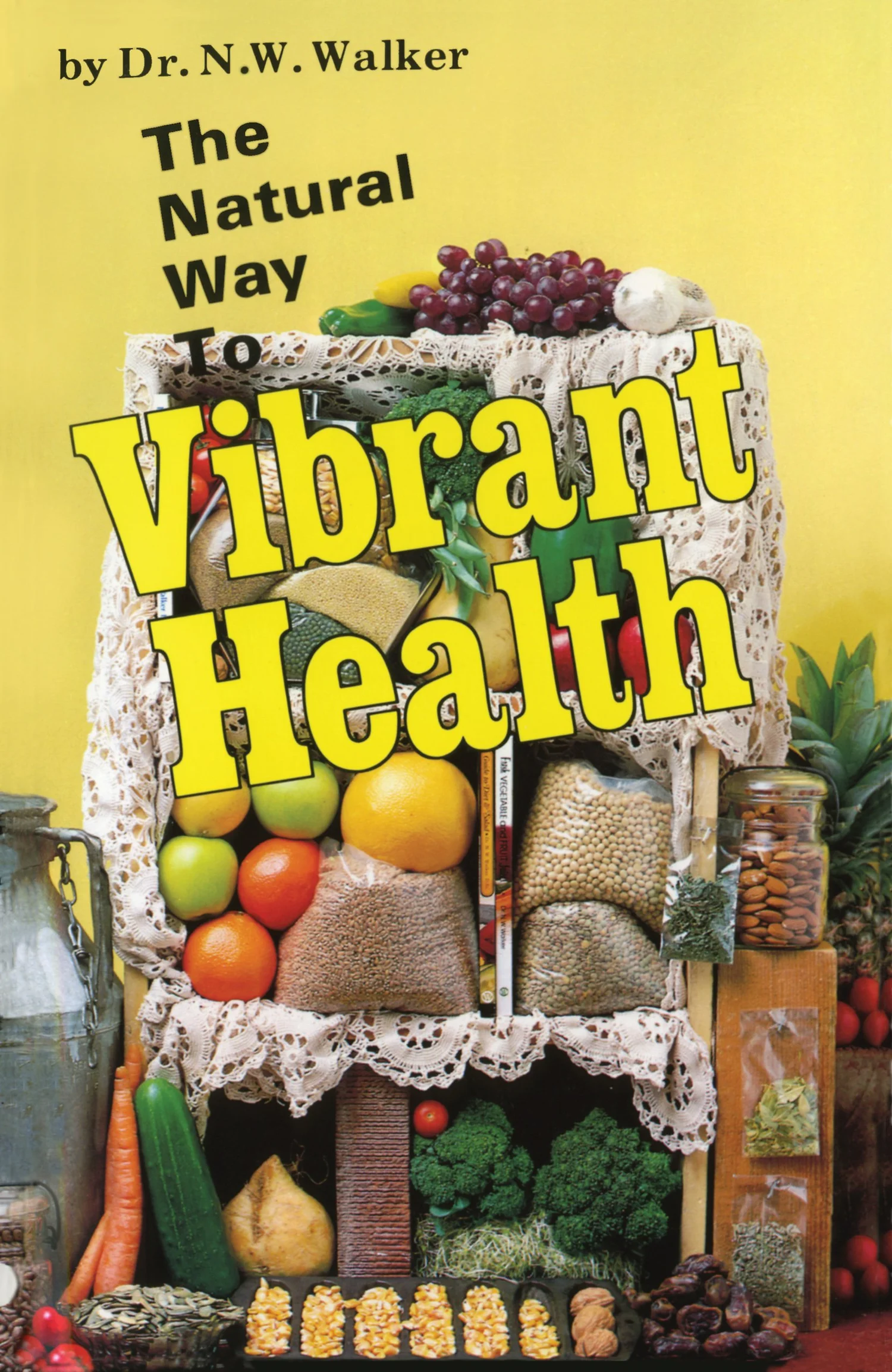
Norman W. Walker
The Natural Way to Vibrant Health
An introduction to Walker’s account of health and his own story. Read alongside the juice and salad books to understand how food fitted into his larger view of living.
Buy on AmazonBook & edition details →