The most useful modern application is a kitchen habit: bring more varied produce into meals, learn how to prepare it well, and keep the whole day’s nourishment in view.
Build a meal, then make it yours.
Freshness
Leaves, grated roots, chopped vegetables, or whole fruit.
Substance
Foods that supply enough energy and protein for your needs.
Flavor
Herbs, nuts, seeds, a simple dressing, and contrasting textures.
A drink
Water, or a small fresh juice alongside the plate.
Walker’s salad book is a reminder that a fresh-food kitchen is bigger than a juicer. Let the salad be substantial and enjoyable. A few leaves and a glass of juice do not automatically make a complete meal.
Three everyday starting points.
The generous lunch bowl.
Combine lettuce, cucumber, grated carrot, herbs, and walnuts with a simple lemon dressing. Add a protein-rich food you enjoy, such as properly cooked beans. Serve with something substantial enough for your appetite.
The crisp side plate.
Shred cabbage and carrot, add apple and seeds, then dress lightly. Keep the textures lively. Serve alongside the rest of lunch or dinner rather than asking one salad to do everything.
The afternoon ritual.
Prepare a small juice while you wash vegetables for supper. Use the same ingredients in a salad later. One preparation session can make several good food choices easier.
These are present-day editorial meal ideas. Cooked beans and other additions are included for a practical, varied meal; they are not claimed as Walker’s original recipes.
Make the habit easier than the exception.
Shop for a few versatile ingredients instead of a long one-use list. Wash what you need, store it well, and arrange the kitchen so the board, knife, salad bowl, and equipment are easy to reach.
Plan for the whole ingredient. Celery leaves can flavor a salad; tender herb stems can go into a dressing; sound vegetable trimmings can be cooked in stock. Use edible parts thoughtfully, and discard anything spoiled.
Keep the book beside the bowl.
Compare the older Diet and Salad Suggestions titles with the current Vegetarian Guide to Diet and Salad. The catalogue records 1940, 1947, 1956, and later editions separately. This is a long-running body of food writing, not one unchanging list.
As you read, distinguish an appealing preparation from an explanation of disease. You can learn technique, flavor combinations, and Walker’s priorities while keeping those categories clear.
Choose a path that fits your kitchen.
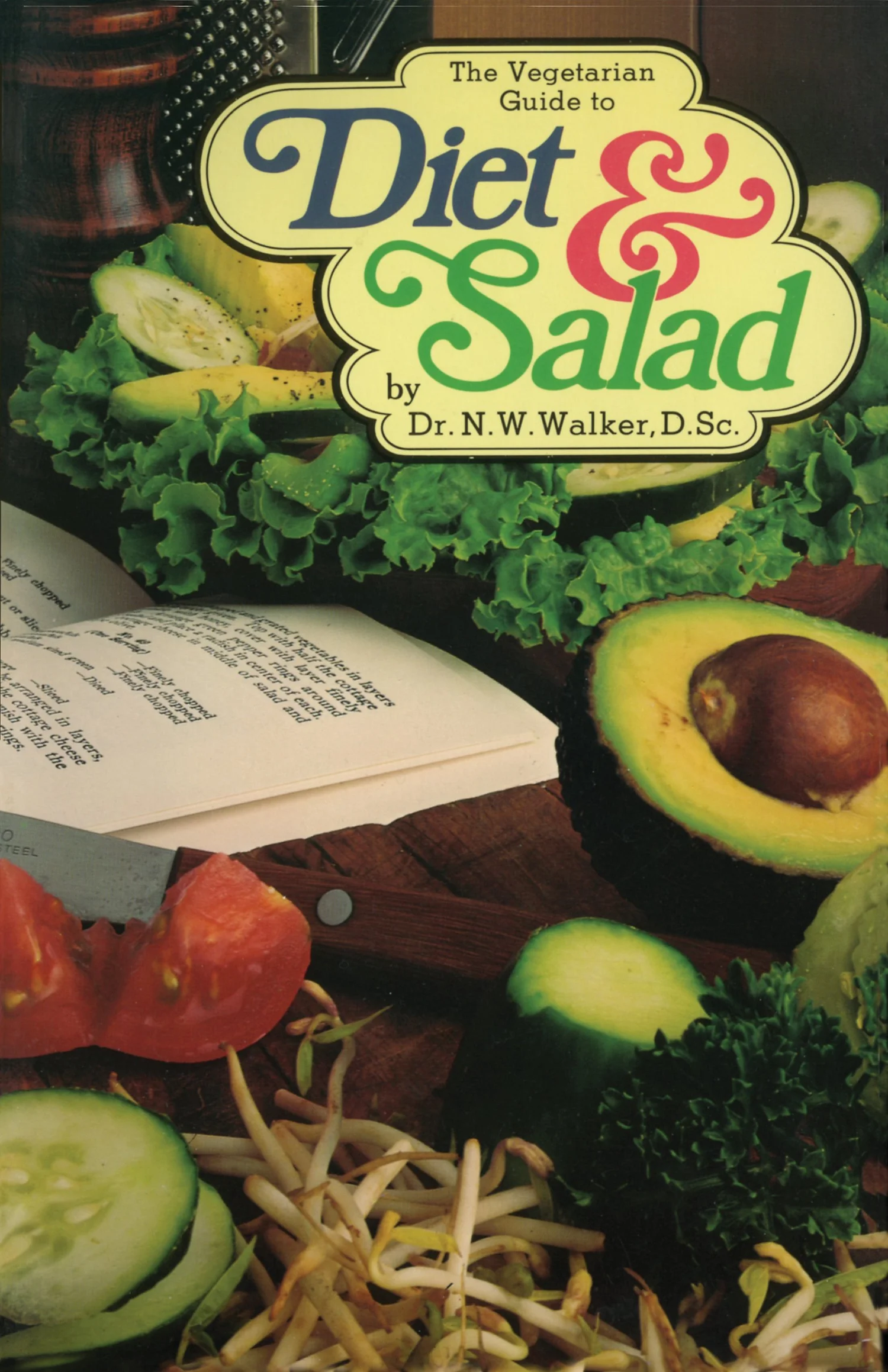
Norman W. Walker
Vegetarian Guide to Diet and Salad
A companion for the table: vegetables, fruit, nuts, salads, and menu ideas. Its ingredient discussions and more than seventy salad combinations make it the most direct bridge from Walker’s books to a varied kitchen.
Buy on AmazonBook & edition details →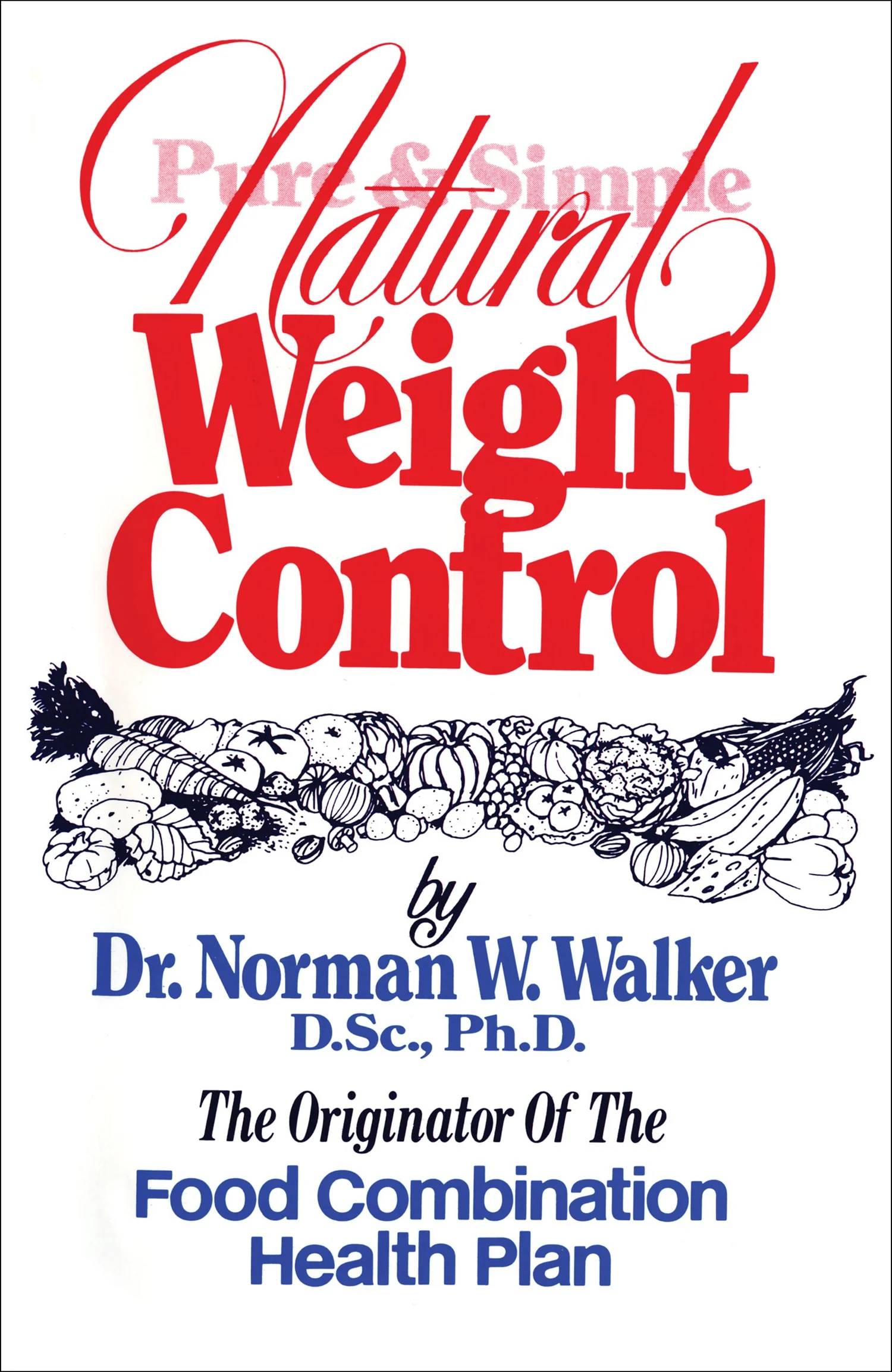
Norman W. Walker
Natural Weight Control
Walker returns to food choices, eating patterns, and fresh produce, with fruit dishes, salads, and sample menus. A practical part of the reading collection, approached as a food book rather than a promised result.
Buy on AmazonBook & edition details →