A combination should make sense in the kitchen. Learn the ingredients, record what you use, and keep Walker’s original formulas distinct from modern adaptations.
Think in ingredients, not miracle formulas.
Walker’s books made combinations memorable. For a modern reader, the most useful first step is to understand the contribution of each ingredient: sweetness, aroma, acidity, color, texture, and the amount of juice it yields.
Build one change at a time. If yesterday’s blend was too sweet, use less fruit or more cucumber in the next batch. If a strong green flavor overwhelms everything else, reduce it. A notebook turns preference into something you can reproduce.
Four building blocks.
Use a familiar base such as carrot or cucumber. Add character with celery or a little leafy produce. Bring brightness with lemon. Then taste for balance. This is our culinary framework for exploring the subject, not a formula Walker published.
Simple combinations also make it easier to identify an ingredient you do not enjoy or tolerate. A long ingredient list is not a measure of nutritional quality.
Keep a useful juice notebook.
| Write down | Why it helps |
|---|---|
| Ingredient weights | “Two carrots” changes with their size; a weight is reproducible. |
| Machine and preparation | Chopping, extraction, and straining affect the final texture. |
| Yield and pulp | See what the ingredients actually produce. |
| Taste and meal context | Improve a drink you enjoy alongside real food. |
| Book and page | Keep a historical formula distinct from your adaptation. |
Three directions to explore.
Orange & bright.
Carrot, cucumber, and a squeeze of lemon. Begin with the carrot flavor, then make the finish lighter.
Green & crisp.
Cucumber and celery, with a small amount of apple if desired. Taste the celery first; it can dominate a blend.
Root & leaf.
Carrot with a small amount of beet and leafy greens. Use the beet for depth rather than making every ingredient equally strong.
These are flexible flavor ideas, not clinical protocols, exact historical prescriptions, or a juice-only menu. Keep portions and ingredients suited to your own circumstances.
When an exact formula matters.
Use the edition in front of you. Record the title, date, formula number if present, and page. Later websites sometimes copy a recipe without its surrounding explanation, or transpose weights and volumes. That breaks the connection to the original.
The catalogue separates editions to make this kind of checking possible. It does not claim to have transcribed every formula. The current publisher edition provides the most straightforward reading route.
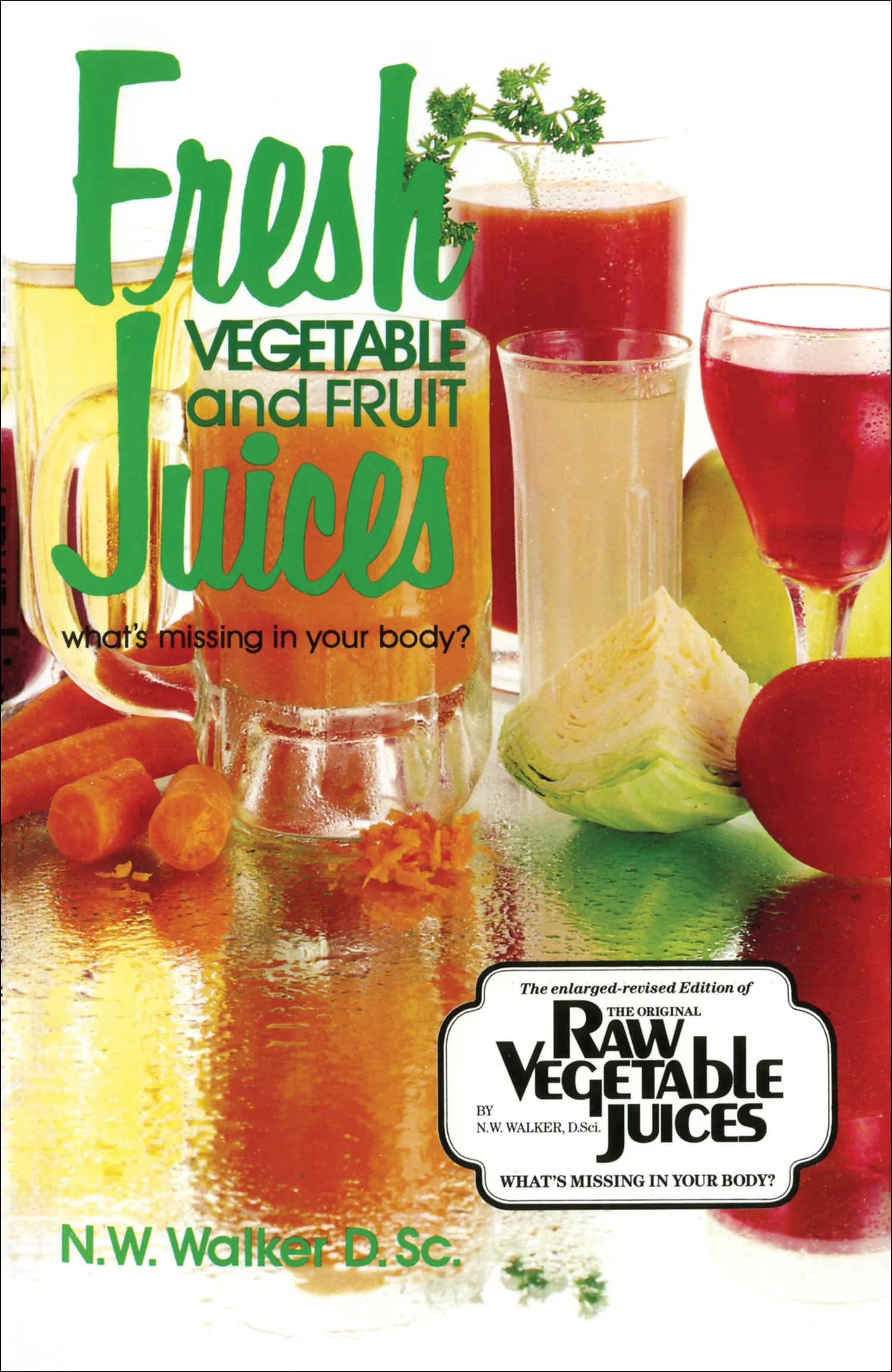 Book, publisher, and edition details
Norman W. Walker
Fresh Vegetable and Fruit Juices
Walker’s central juice reference, organized around ingredients, combinations, and his explanations of their use. Read it for the shape of his method and the historical language behind the fresh-juice movement.
Buy on AmazonBook & edition details →