At the heart of Walker’s food work
Freshjuice.
The method behind
the glass.
Vegetables. Fruit. The separation of juice from pulp. Follow Walker’s most recognizable legacy into the books, the extraction process, and the details that make a modern kitchen practice useful.
Begin with the question
How do you get
from produce to juice?
Ingredients. Preparation. Extraction. A habit you can understand.
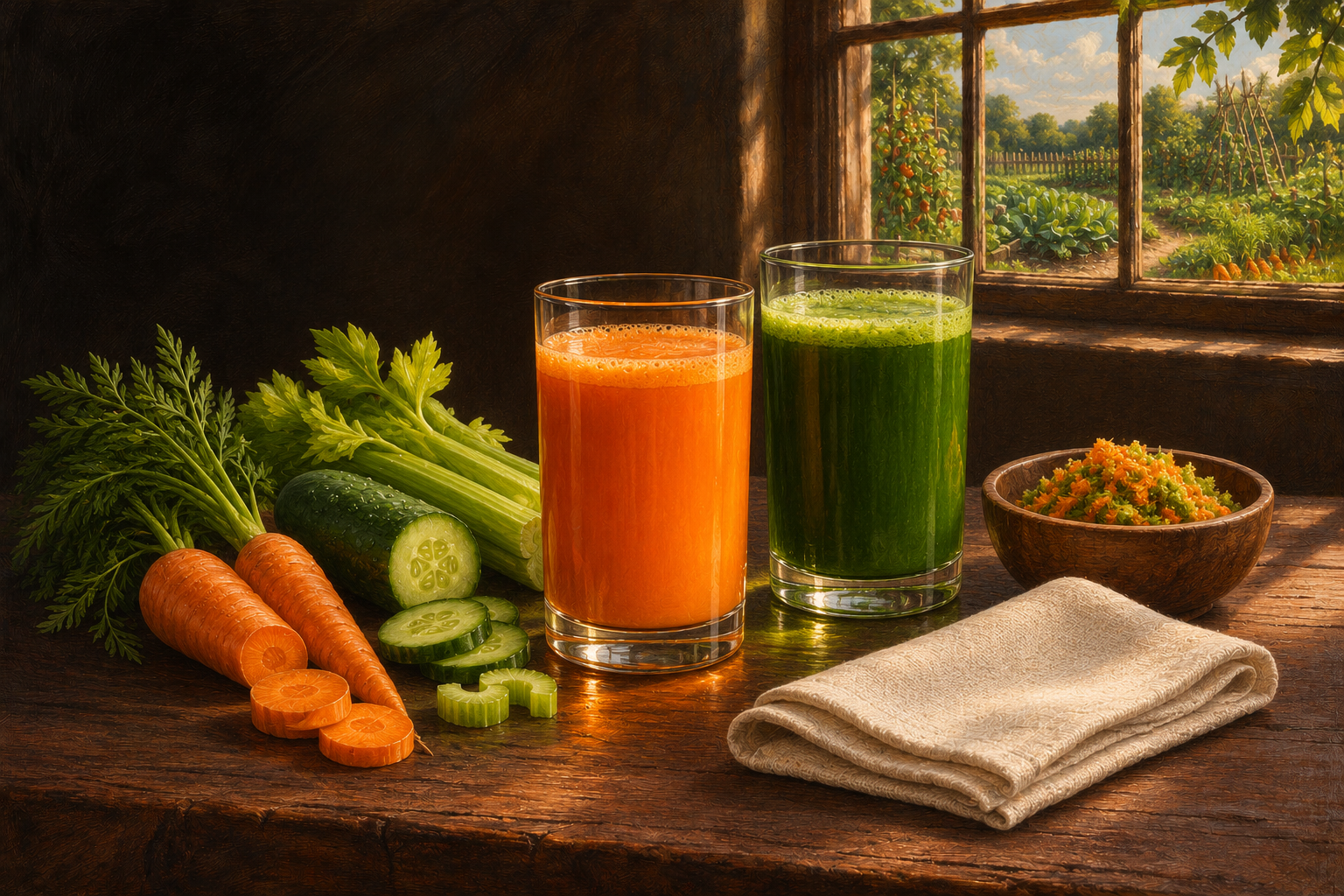
Walker’s juice writing asks the reader to pay close attention to what happens between choosing a vegetable and drinking its juice. The Norwalk approach is associated with two distinct mechanical jobs: reducing the produce to pulp, then pressing that pulp.
That separation is useful to understand even before considering a machine. Chopping or grinding changes the structure of the food. Pressing then separates liquid from the prepared material. The result depends on the ingredient, its condition, preparation, and the equipment.
The publisher’s account credits Walker with the Norwalk hydraulic-press juicer. Detailed dates, individual patents, engineering revisions, and business ownership require their own documentary sources; this archive does not fill those gaps with a tidy but unverified invention story.
The defining mechanical idea
Two stages.
One preparation.
Learn each stage on its own, then see how they work together.
Reduce the produce
to pulp.
The cutting or grinding stage breaks down the ingredients before pressing. Carrot, cucumber, apple, and leafy vegetables behave differently because their structure and water content differ.
The exact procedure belongs to the model’s own instructions. Use the correct parts, food preparation, feed rate, and guarding for the machine in front of you.
Press the pulp.
Collect the juice.
Pressure separates liquid from the prepared pulp. A pressing cloth or bag holds the solids while juice is collected. Loading, cloth condition, and the ingredients can affect yield and ease of cleanup.
A dry-looking pulp is an observation about extraction. By itself it is not a laboratory measurement of nutrients or a demonstration of a health outcome.
A process description explains how juice is made. Claims about treatment effects need a different kind of evidence.
The work before the press
The ingredient matters.
So does the preparation.
A good routine begins at the sink and ends with clean equipment.
The clean-up is part of the method.
Choose a workflow you will complete every time. Pulp trapped in screens, seals, cloths, or corners should not become tomorrow’s starting point.
Preparation is a practical skill, and different machines have different procedures. The archive explains the principle; it is not a substitute for the manufacturer’s model-specific manual.
The other half of the picture
Keep the plate
beside the glass.
A juice book and a salad book belong on the same shelf. Walker wrote about both, and the practical distinction remains useful: extracting juice changes the form of the ingredients and removes much of the pulp.
Whole vegetables, whole fruit, nuts, seeds, and other foods bring different textures and contributions to a meal. A more powerful machine does not make a juice-only pattern a complete diet. Build a food practice around the day’s meals, not just the equipment.
The historical equipment story
Norwalk.
A name with a legacy.
Separate the original author, the equipment history, and today’s sellers.
The Norwalk name links Walker’s food philosophy with a recognizable grinding-and-pressing design. Later machines, service businesses, replacement parts, and modern manufacturers belong to subsequent chapters of that history.
An old machine’s badge, serial number, instruction booklet, invoice, and photographs can be important evidence. Record them together. Avoid assigning a machine to a particular year from a seller’s story alone.
This archive is independent of juicer manufacturers and does not sell equipment. A modern product using similar terminology is not automatically a Walker-era artifact or an endorsement by Walker.
For a historical contribution, the most useful material is dated documentation with provenance. Personal recollections can be valuable too, provided they are identified as recollections.
Equipment history & research leads →The idea that carried forward
From Walker’s pages
to a modern kitchen.
The enduring practical interest is in fresh ingredients and a deliberate preparation method. Modern juicing includes many kinds of equipment and many claims. Keep the simple mechanical description separate from promises about enzymes, cleansing, disease, or longevity.
A meaningful comparison names the ingredients, measures the output, and explains the method. A testimonial or an impressive-looking glass cannot answer every question about nutritional composition or a health effect.
Three questions worth asking
Different questions.
Different kinds of evidence.
How much juice?
Yield can be measured: record ingredient weights and the collected volume or mass. Repeat under comparable conditions.
What is in it?
Nutrient content needs an analysis of the actual sample and method. Color, speed, or a marketing name is not that analysis.
What does it do?
A claim about a person’s health requires evidence about people and outcomes. Extraction efficiency alone cannot establish it.
Read the vocabulary carefully
Keep the source
in the sentence.
Walker used a confident vocabulary of living food, organic minerals, enzymes, and bodily renewal. These terms help identify his philosophy and its historical setting. They should be quoted or paraphrased as his position, with an edition reference where a specific passage is discussed.
Today’s kitchen guides here concentrate on ingredients, taste, preparation, and habits. They are editorial applications inspired by the topic, not missing chapters written by Walker.
That distinction protects the work from being remade into a collection of unattributed internet claims. The original author deserves to be read in context, and the modern reader deserves to know who is speaking.
Let the food stay in the picture
A better glass.
A wider table.
A useful routine can be modest: a small vegetable juice alongside lunch, a salad built from the same ingredients, and a plan to use the rest of the produce. Learn one combination before adding more.
The garden, market, kitchen, and bookshelf reinforce one another. A well-used book and a few familiar ingredients can be more valuable than an elaborate routine you cannot sustain.
Bring the ideas into everyday meals →Take the details seriously
Know what is
in the glass.
A useful description gives you more than a memorable promise.
What exactly went into this blend?
Keep the ingredients and quantities visible, including any added sweeteners. A name such as green juice does not identify a recipe.
How was it made and stored?
Ask about treatment and refrigeration when buying juice. At home, clean the equipment and use or refrigerate the juice promptly.
Does the routine fit my circumstances?
Keep individual dietary needs in view. Grapefruit can interact with some medicines; large dietary changes may need individual advice. Fresh juice is food, not a replacement for prescribed treatment.
Which part comes from Walker?
Record the title and edition for a historical statement. Identify a modern adaptation in its own words. Do not turn a later product advertisement into an original quotation.
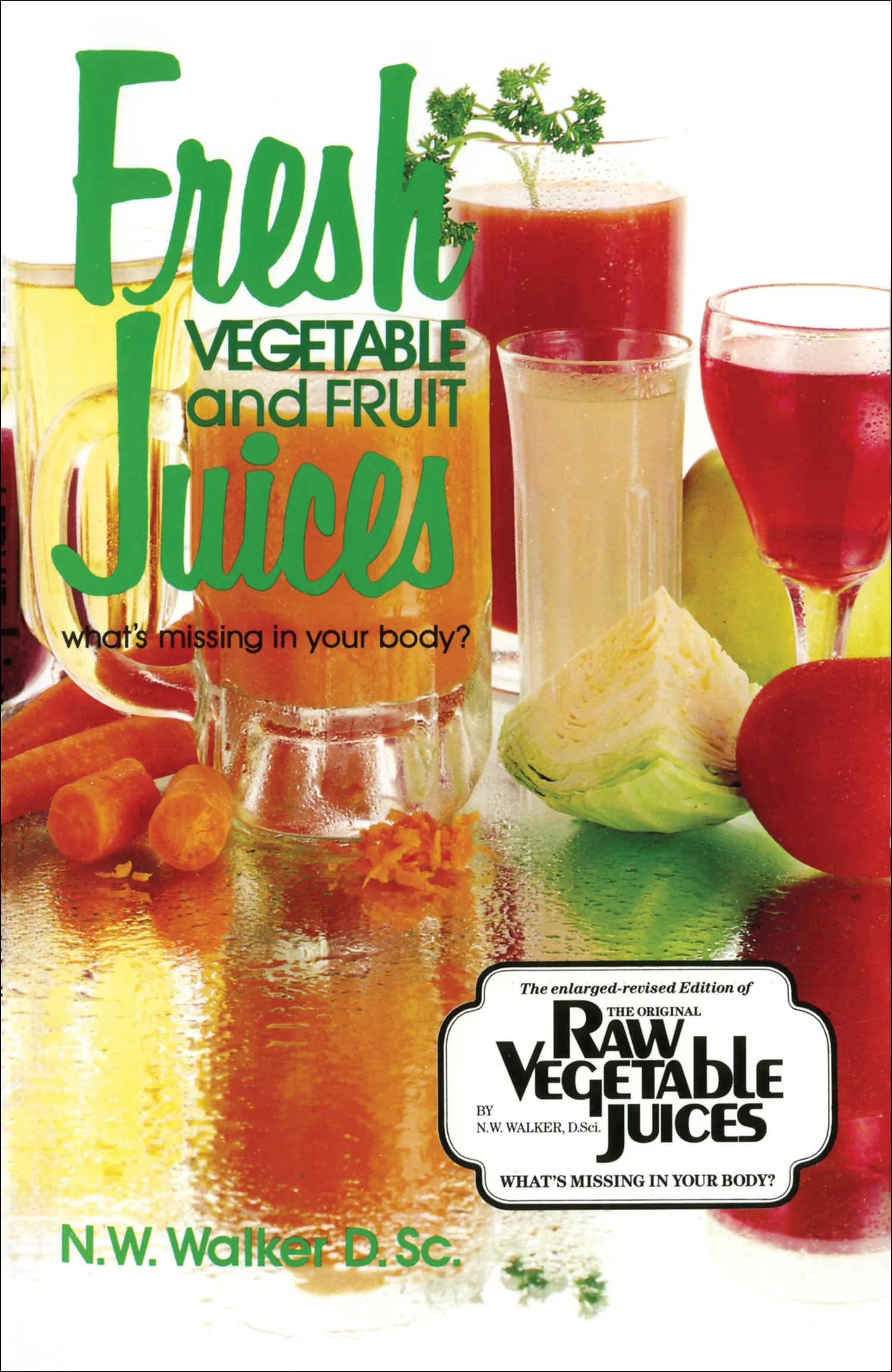
Norman W. Walker
Fresh Vegetable and Fruit Juices
Walker’s central juice reference, organized around ingredients, combinations, and his explanations of their use. Read it for the shape of his method and the historical language behind the fresh-juice movement.
Buy on AmazonBook & edition details →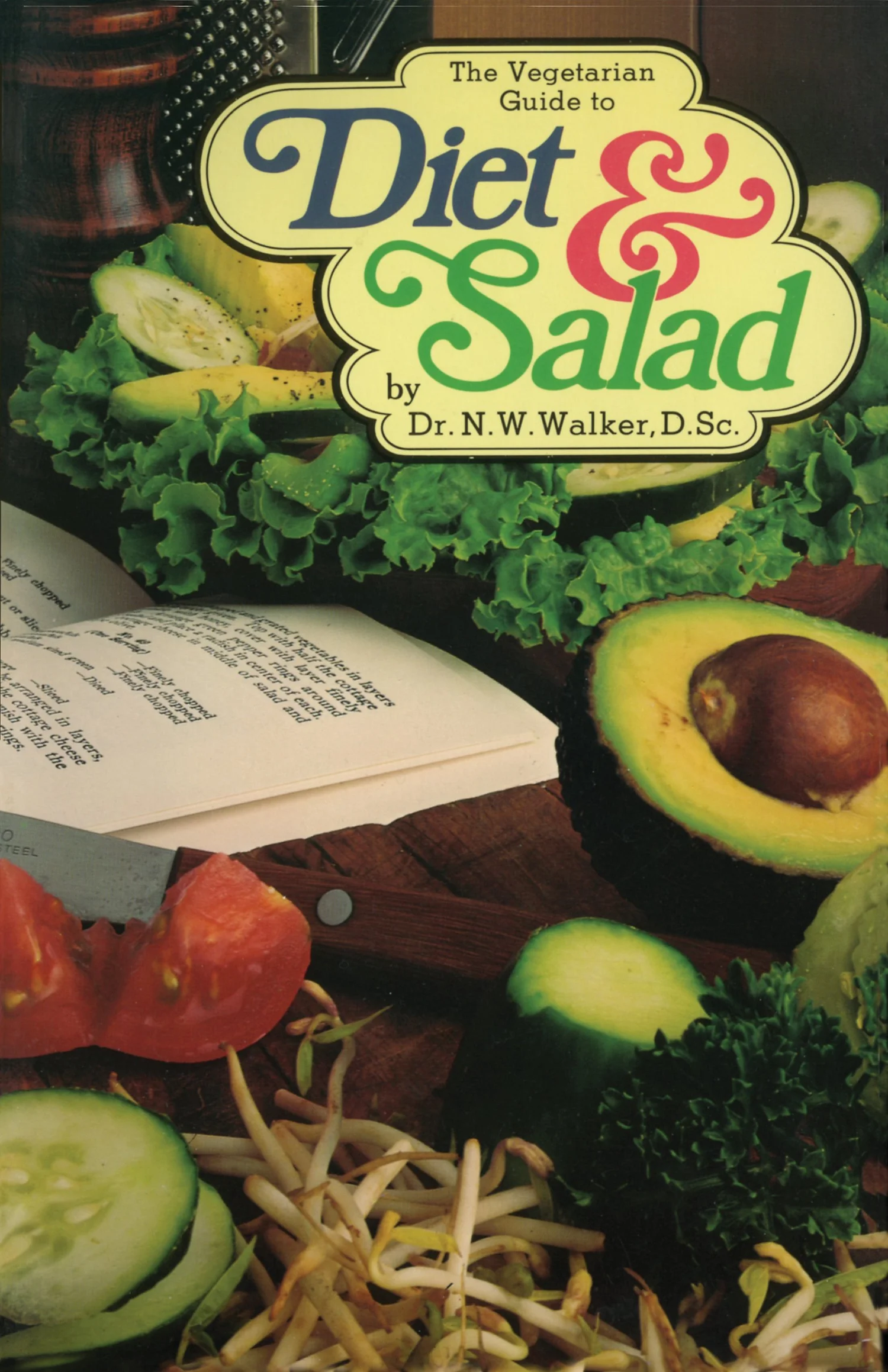
Norman W. Walker
Vegetarian Guide to Diet and Salad
A companion for the table: vegetables, fruit, nuts, salads, and menu ideas. Its ingredient discussions and more than seventy salad combinations make it the most direct bridge from Walker’s books to a varied kitchen.
Buy on AmazonBook & edition details →Go straight to the source
The books
behind the story.
Follow the title history, then read a clearly identified edition.